Over the past 15 years more than a billion people have escaped poverty. DW looks at the role the growing middle class plays around the world - and how it can contribute to political and societal change.
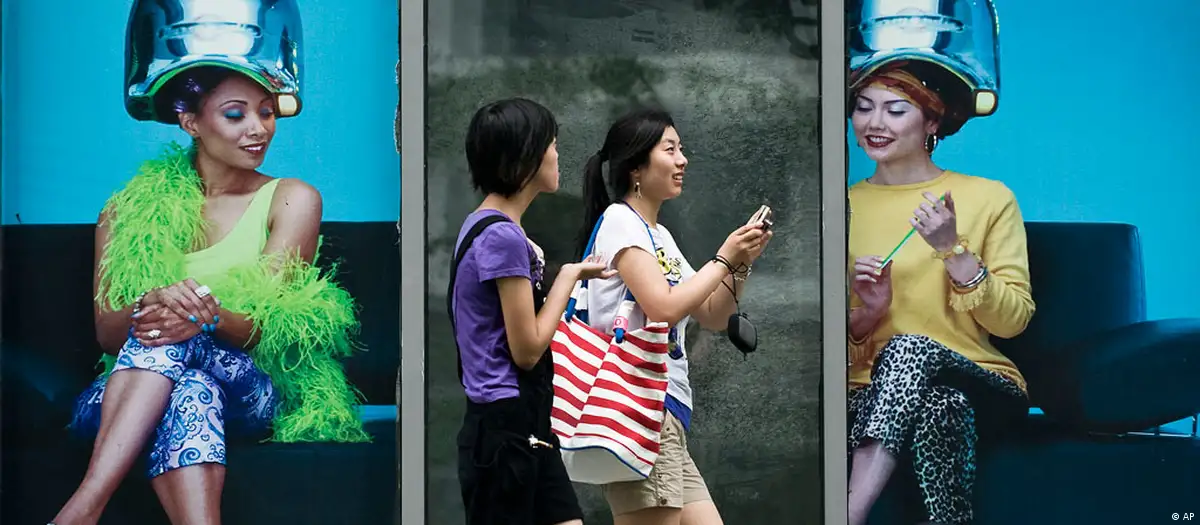
A middle class has started to establish itself in recent years in many emerging and developing countries. But the successes achieved in the fight against poverty have brought about new challenges. (25.12.2012)
Colombia's economy has improved over the past two decades, but the new middle class has only profited to a limited extent. Their social and economic situation is insecure. (31.01.2013)
For decades, the US middle class could count on a good and improving standard of living. But the financial crisis has laid bare shifts in America's foundation, which suggest the middle class is being squeezed out. (19.01.2013)
Chile's middle class is in better shape than it has been in decades. But in the Latin American country often praised for the economic strides it has made, the cost of prosperity is high, experts warn. (17.01.2013)
Under Brazil's former president Lula da Silva, 30 million people managed to escape poverty and join the ranks of the country's new middle class. Inequality, however, has not disappeared. (26.12.2012)
The gap between rich and poor is widening in countries in southeast Europe, where the middle classes are threatened by social decline. (24.01.2013)
Shops in Greece are folding by the day. Many Greeks are unemployed, while others work for half the pay and those who can, leave the country. The economic crisis is draining its middle class financially. (23.01.2013)
The middle class is the backbone of society. The Greek philosopher Aristotle recognized this more than 2,300 years ago. But, a new study warns that the middle class in Germany is shrinking. (16.12.2012)
One year after allegations of vote-rigging triggered mass protests in Russia, there are considerably fewer people today who support the opposition. And still, not all observers believe that the movement has failed. (03.12.2012)
China's Communist Party aims at strengthening the middle class to maintain stability in the country. But contrary to what many in the West might take this to mean, a turn towards democracy is not likely. (17.01.2013)
The fast-growing Indian middle class now consists of around 300 million people, who model their new consumer lifestyle on the West. As a result, vegetarianism is falling out of favor. (02.01.2013)
A new middle class emerged for the first time in Vietnam in the 1990s. It has won a few freedoms, but remains fragile. Now, the global economic crisis threatens to undo the achievements. (17.12.2012)
Lebanon was once known as the Switzerland of the Orient. But that was a long time ago. Today, many Lebanese are struggling to survive in an increasingly difficult economic environment. (07.01.2013)
In Ghana, the middle class is growing fast. It's a trend typical across the whole continent. But, there are rising concerns about the impact of the development and whether certain parts of society are being left behind. (02.01.2013)
The middle class forms the core of the pro-democratic movement in Egypt. But the economic downturn and the country's uncertain political future are threatening its existence. (29.01.2013)
Germany has more than 19,000 foundations that dedicate some 17 billion euros annually to a wide range of causes. They are now facing a challenge: become more professional without losing their ideals.
Markets can influence whether actors in it are driven by morals - that is the outcome of an experiment conducted by economists at the Universities of Bonn and Bamberg. DW spoke to Nora Szech about her study.
Rosie Stancer wants to be the first woman in the world to walk solo to both poles. She's already conquered the Antarctic alone. Now she's preparing to take on the Arctic.
Young people from around the world have gathered in Berlin for the Youth Sustainability Summit. They are discussing ways to protect the planet, but saving the environment isn't easy.
Germany's parliament has begun lengthy debate on draft legislation to find the safest possible underground site to stash waste from nuclear power stations for eons. Legislative details have already sparked ructions.
The Arctic Council has accepted China and other Asian states as permanent observers. With climate change making the region more accessible to shipping and commercial exploitation, countries are lining up to join.
100 countries worldwide now produce electricity with wind power. So far, it's a boom that has mainly occurred in Asia, North America and Western Europe. Now, Eastern Europe and Latin America are getting involved.
Each week, DW brings you personal stories from around the globe.